Cranberry Orange Scones with Vanilla Glaze

Cranberry Orange Scones with Vanilla Glaze

Breakfast

Description

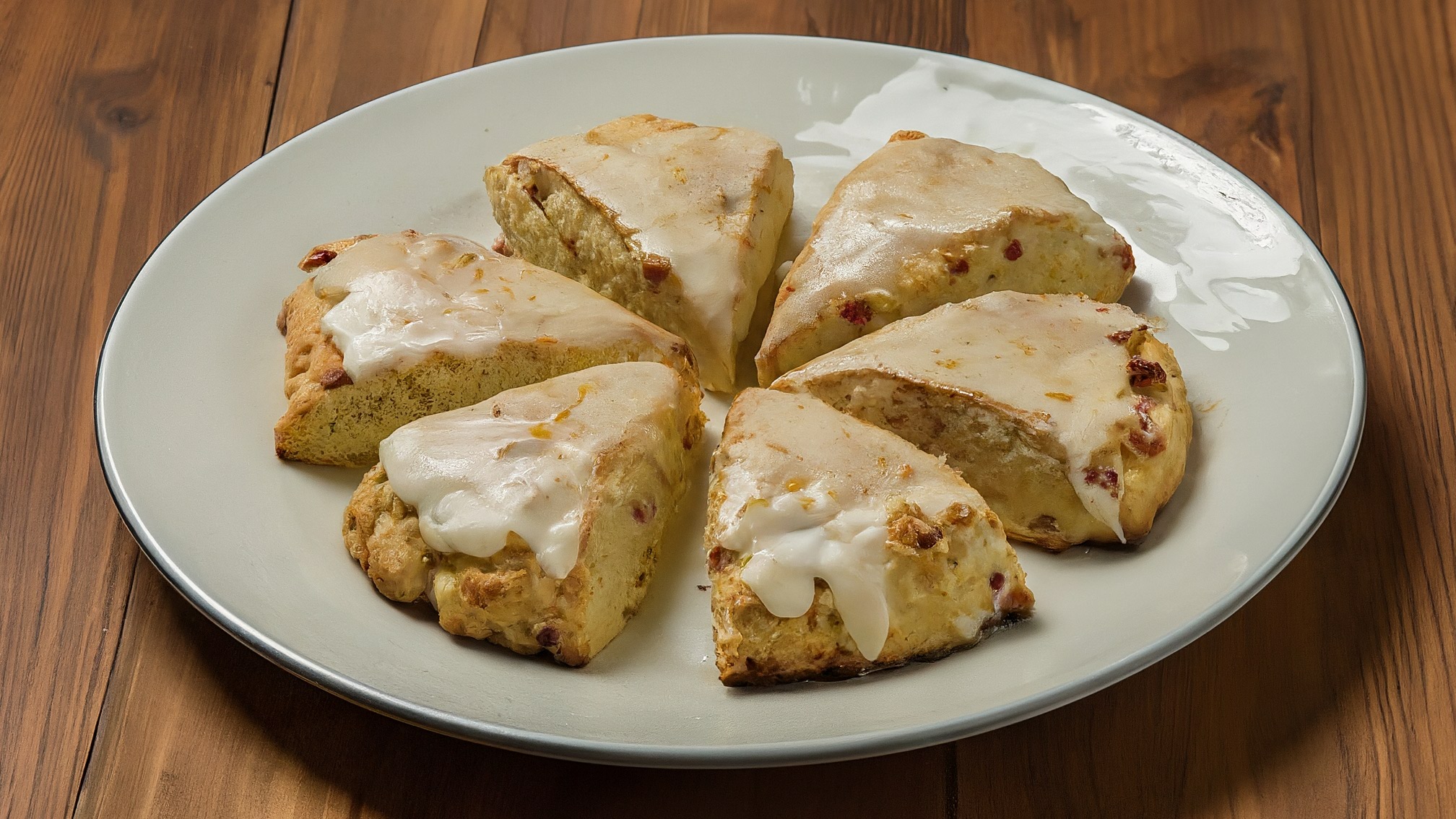
These tender, buttery cranberry orange scones are a delightful breakfast or brunch treat, bursting with bright citrus and tart cranberries. Finished with a sweet vanilla glaze, they're the perfect accompaniment to your morning coffee or tea, especially during the fall and holiday seasons.
The Story

When you bite into a tender, crumbly scone, especially one bursting with the vibrant flavors of cranberry and orange, you're not just enjoying a delightful breakfast pastry – you're partaking in a culinary journey spanning centuries and continents. The scone, in its earliest forms, was a far cry from the fluffy, butter-rich treats we adore today. Its lineage can be traced back to 16th-century Scotland, where it was likely a type of 'bannock' – a simple, unleavened round flatbread, often baked on a griddle or over an open fire. These humble ancestors were made with oats or barley, hearty and utilitarian, designed to sustain rather than delight. Legend even attributes the popularization of the scone to Mary, Queen of Scots, who supposedly enjoyed them with clotted cream in her frequent afternoon tea rituals, elevating them from peasant fare to a royal indulgence. Over time, as baking powder and refined flour became available, the scone evolved, taking on a lighter, more delicate texture and becoming an indispensable part of British and Scottish tea traditions, particularly the iconic 'cream tea' service.

But how did this quintessential British pastry become a beloved staple in American breakfast spreads, especially with the distinctly autumnal flavors of cranberry and orange? As immigrants from Scotland and England arrived on American shores, they brought their culinary traditions with them. Yet, the American palate, and indeed its pantry, began to reshape the scone. Here, scones often became sweeter, richer, and larger – more aligned with our preference for a substantial breakfast pastry or a dessert-like treat, rather than a savory accompaniment to tea. The true transformation, however, arrived with the integration of native North American ingredients. Enter the cranberry: a tart, jewel-toned berry revered by Native Americans for centuries, not just for food but for dyes and medicine. It was a natural partner for the scone. Paired with the bright zest of oranges, cranberries found their perfect sweet-tart counterpoint, creating a flavor profile that became synonymous with American fall harvests and holiday tables. This wasn't just a British scone anymore; it was an American scone, proudly showcasing local bounty.

Today, the Cranberry Orange Scone with its shimmering vanilla glaze represents the perfect marriage of Old World tradition and New World innovation. It’s a testament to how food evolves, adapts, and embraces new environments and ingredients, creating something utterly unique and undeniably delicious. From cozy coffee shop counters to elegant brunch buffets, this scone has cemented its place as a comforting indulgence, a burst of sunshine on a chilly morning, or a festive offering during the holidays. It carries the echo of Scottish griddles and English tea rooms, but each bite delivers a taste of American ingenuity – a celebration of the humble cranberry and the citrusy zest that cuts through the rich, buttery crumb. It's more than just a pastry; it's a story told through flavor, a culinary bridge connecting histories and cultures, all while offering a moment of pure, unadulterated pleasure.

Ingredients

Instructions

Video Tutorial

Nutrition

Calories 320
Protein 5g
Carbs 45g
Fat 15g

Notes

• **Cold Butter is Key:** Ensuring your butter is very cold is crucial for achieving flaky scones. You can even cube it and freeze it for 10-15 minutes before adding to the flour mixture.
• **Don't Overmix:** Overmixing develops gluten, which can lead to tough scones. Mix just until the ingredients are combined.
• **Variations:** For a different flavor profile, try substituting lemon zest for orange, or add a pinch of cinnamon to the dry ingredients. A sprinkle of turbinado sugar on top before baking adds a lovely crunchy texture.
• **Storage:** Scones are best enjoyed the day they are baked. Store leftover unglazed scones in an airtight container at room temperature for up to 2 days. Glazed scones should be stored similarly but may become a bit sticky. Reheat briefly in a microwave or oven.
• **Freezing:** Unglazed scones can be frozen after baking and cooling completely, wrapped tightly, for up to 1 month. Thaw at room temperature and warm in the oven. You can also freeze raw scone wedges on a baking sheet, then transfer to a freezer bag. Bake from frozen, adding a few extra minutes to the baking time.

Leave a Reply

Your email address will not be published. Required fields are marked *