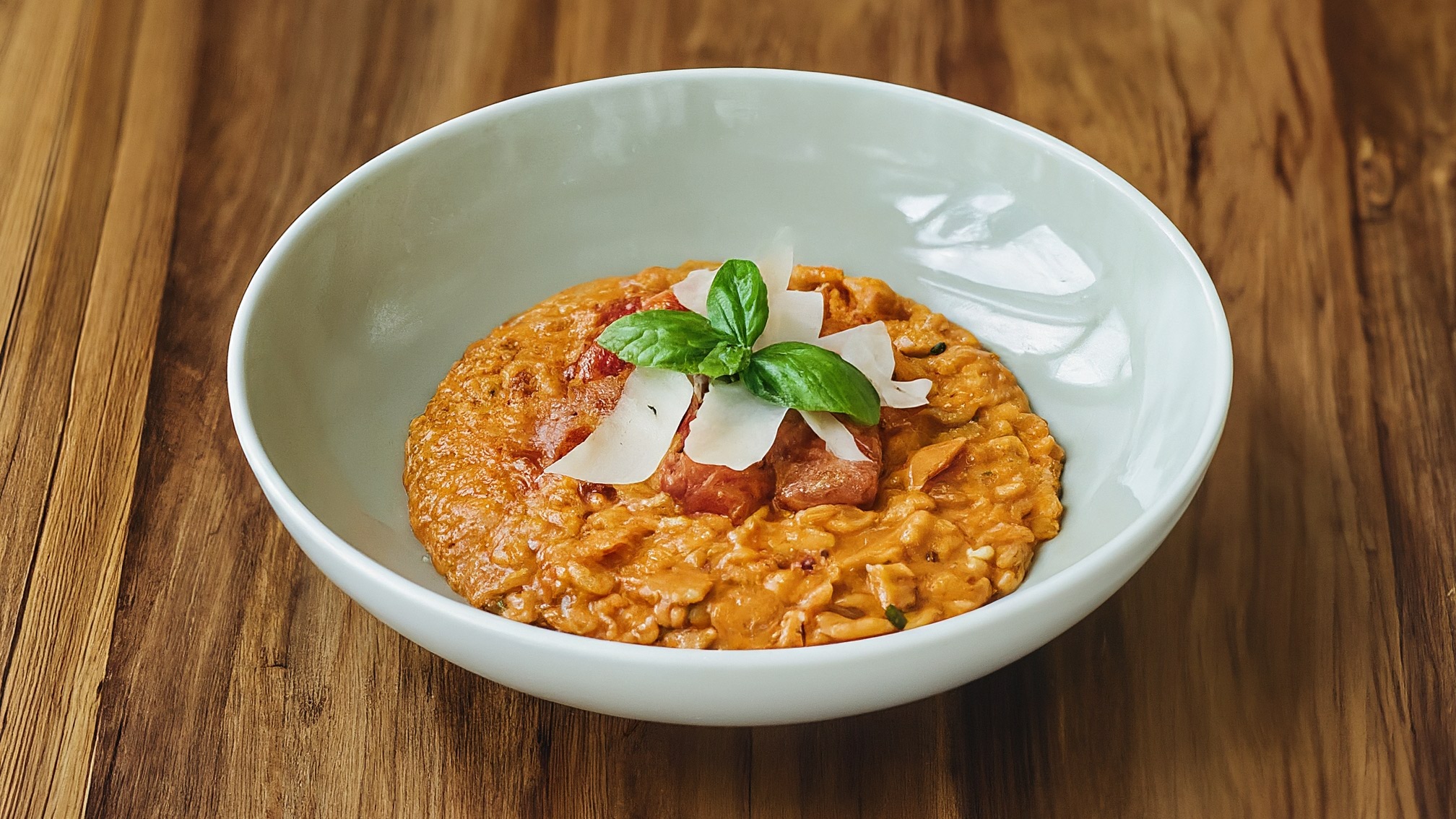
When we picture Italian comfort food, a creamy bowl of risotto often comes to mind. That luscious, slow-cooked Arborio rice, steeped in broth until it reaches a perfect al dente bite, enriched with butter and Parmesan, is a hallmark of Northern Italian cuisine. And for many, a vibrant tomato risotto feels like an undeniable classic, a dish so inherently Italian it must have graced tables for centuries. Yet, here's a delicious secret that might surprise you: while rice has been cultivated in the Lombardy plains since the Middle Ages, the very ingredient that gives our "Creamy Tomato Risotto" its signature hue and tangy sweetness wasn't always a part of the Italian pantry, let alone a staple in a dish like risotto. In fact, the journey of the tomato to becoming an indispensable star of Italian cooking, especially in the north, is a fascinating tale of global exchange, suspicion, and eventual culinary triumph.
The humble tomato, now synonymous with Italy, originally hailed from the Andes of South America, specifically Peru and Mexico. It made its grand entrance into Europe in the 16th century, brought back by Spanish conquistadors. But unlike its rapid adoption in Spanish and Portuguese cooking, the Italians were initially wary. The bright red fruits were often cultivated as ornamental curiosities rather than edible produce, earning nicknames like "pomodoro" (golden apple) in Italy, a nod to earlier yellow varieties. Many Europeans, especially the wealthy, believed tomatoes were poisonous due to their membership in the nightshade family, a concern exacerbated by the acidic fruit reacting with the lead content in common pewter plates of the era, causing lead poisoning symptoms. It wasn't until the 18th century, primarily in the poorer, sun-drenched southern regions like Naples, where necessity bred experimentation, that the tomato truly began its culinary conquest, first as a humble peasant food, slowly shedding its dangerous reputation.
So how did this once-feared fruit, a late bloomer in the Italian kitchen, find its way into the heart of a Northern Italian risotto? The full embrace of the tomato throughout all of Italy was a gradual process, spanning centuries. While southern Italy was perfecting its sauces, the north, with its rich dairy and rice traditions, continued to evolve its own distinct culinary identity. The widespread adoption of tomato cultivation and its integration into northern dishes truly flourished only in the late 19th and early 20th centuries, propelled by industrial canning and a unified Italian identity that celebrated regional specialties. Thus, our beloved Creamy Tomato Risotto isn't an ancient recipe passed down from Roman times, but rather a brilliant, relatively modern fusion. It’s a testament to Italy's incredible culinary adaptability – a marriage of indigenous Northern Italian rice and dairy traditions with the vibrant, once-exotic 'golden apple' from across the ocean. It beautifully illustrates how even the most iconic cuisines are dynamic, ever-evolving tapestries woven with threads from distant lands and the passage of time, culminating in a dish that now feels utterly timeless and irresistibly comforting.